

Don't buy a TV until you read this guide to all those HDR standards
Don't buy a Tv until y'all read this guide to all those HDR standards
Loftier Dynamic Range (HDR) is one of the all-time features to come to TVs in the last few years, and it'southward become a cardinal feature to watch for when shopping for a new ready. But there sure is a lot of new jargon to go with the feature.
There are several competing formats, like Dolby Vision, HDR10 and HDR10 Plus. Then what's the difference between them, and which should you be looking for when you're shopping for a new Telly?
What is HDR?
High dynamic range content — often referred to but as HDR — is a term that started in the world of digital photography, and refers to adjusting the contrast and brightness levels in different sections of an image. Along with modern TVs' power to provide higher luminance and more targeted backlight command, the improver of HDR is a new level of picture quality.
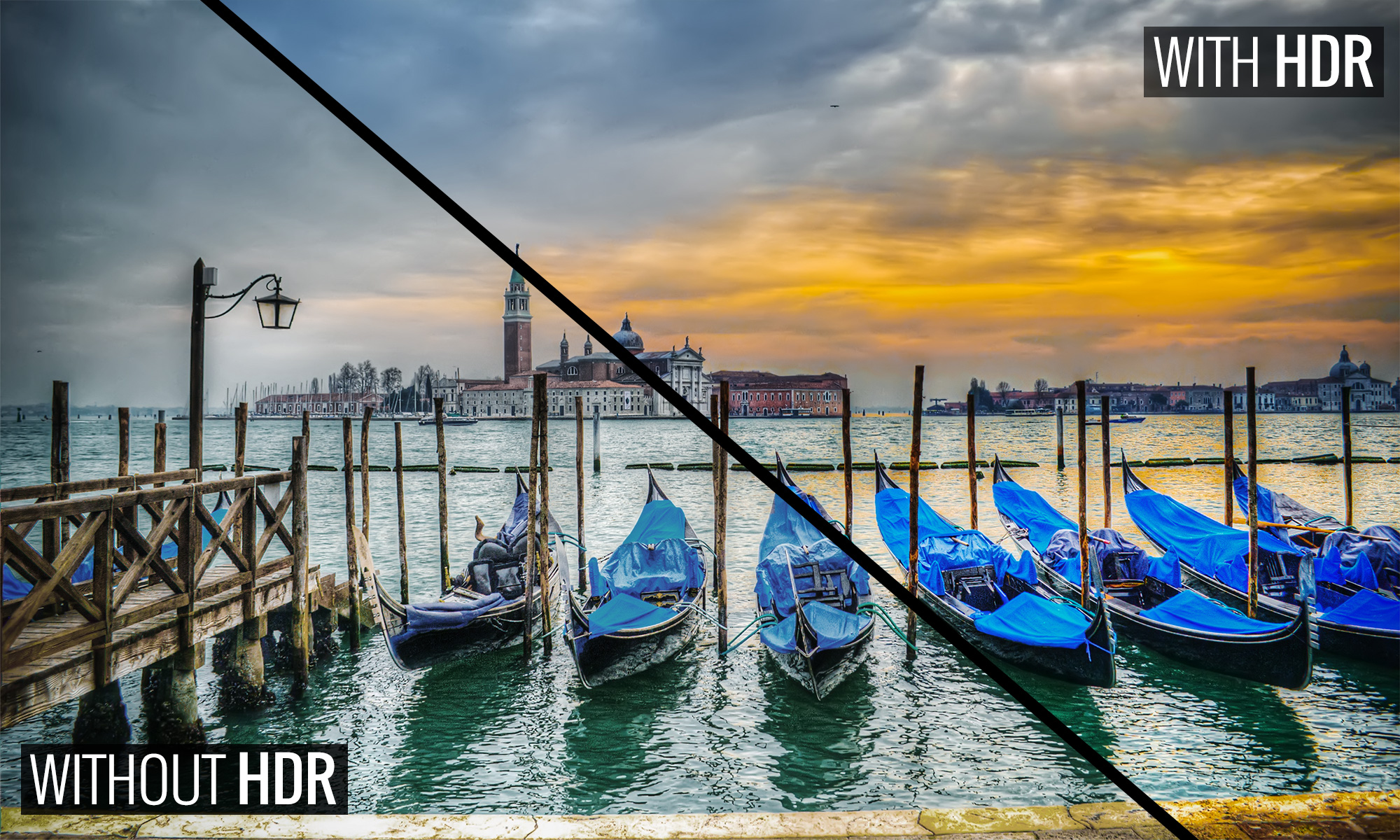
Compared to older standard dynamic range (SDR) content, HDR provides a more than nuanced, life-like image. Details are easier to encounter, colors are richer, and subtle gradations of color and lighting can be more accurately reproduced for the viewer. It's a small-scale but significant change that can dramatically improve moving-picture show quality.
And with today's TVs, which feature more powerful video processors and often displays that tin can dim one portion of the brandish while brightening another, information technology'due south the best way to have advantage of a Telly's full capabilities. It'southward even more pronounced on premium TVs, which feature detached dimmable zones or fifty-fifty (in the case of OLED TVs) the power to burnish or darken individual pixels.

Simply enjoying that HDR goodness requires both an HDR-capable TV and content that has the additional effulgence information that makes HDR work. This actress data, chosen metadata, provides information for a picture show (or even individual movie scenes) that tailors the brightness changes to the content. When it's washed right, the departure is stark.
The problem is that there are actually several different versions of HDR, each with unlike hardware requirements and data types, equally well equally technical strengths and weaknesses. Let'southward dive into the versions of HDR y'all demand to know.
The basics: HDR10 and HLG
At the most basic level, there are two forms of HDR that are freely available, open up standards that will work with any HDR-capable Goggle box or device.
HDR10
The closest thing there is to an official HDR standard is called HDR10. Developed past the UHD Brotherhood and the Consumer Electronics Association (CEA), in that location's no licensing fee for manufacturers to pay, so it's included on every Television that meets the minimum specs for basic HDR support.
HDR10 is probably the simplest format, as well. It uses what is called "fixed" metadata, meaning that it sets the HDR optimization one time for an unabridged testify or movie. That'south cracking for the nearly part, since it offers a big improvement over SDR content, but it's a little limited by existence static, particularly if a movie has i or ii scenes that are especially dark or brilliant. The fixed metadata can't adjust to accommodate those individual scenes.
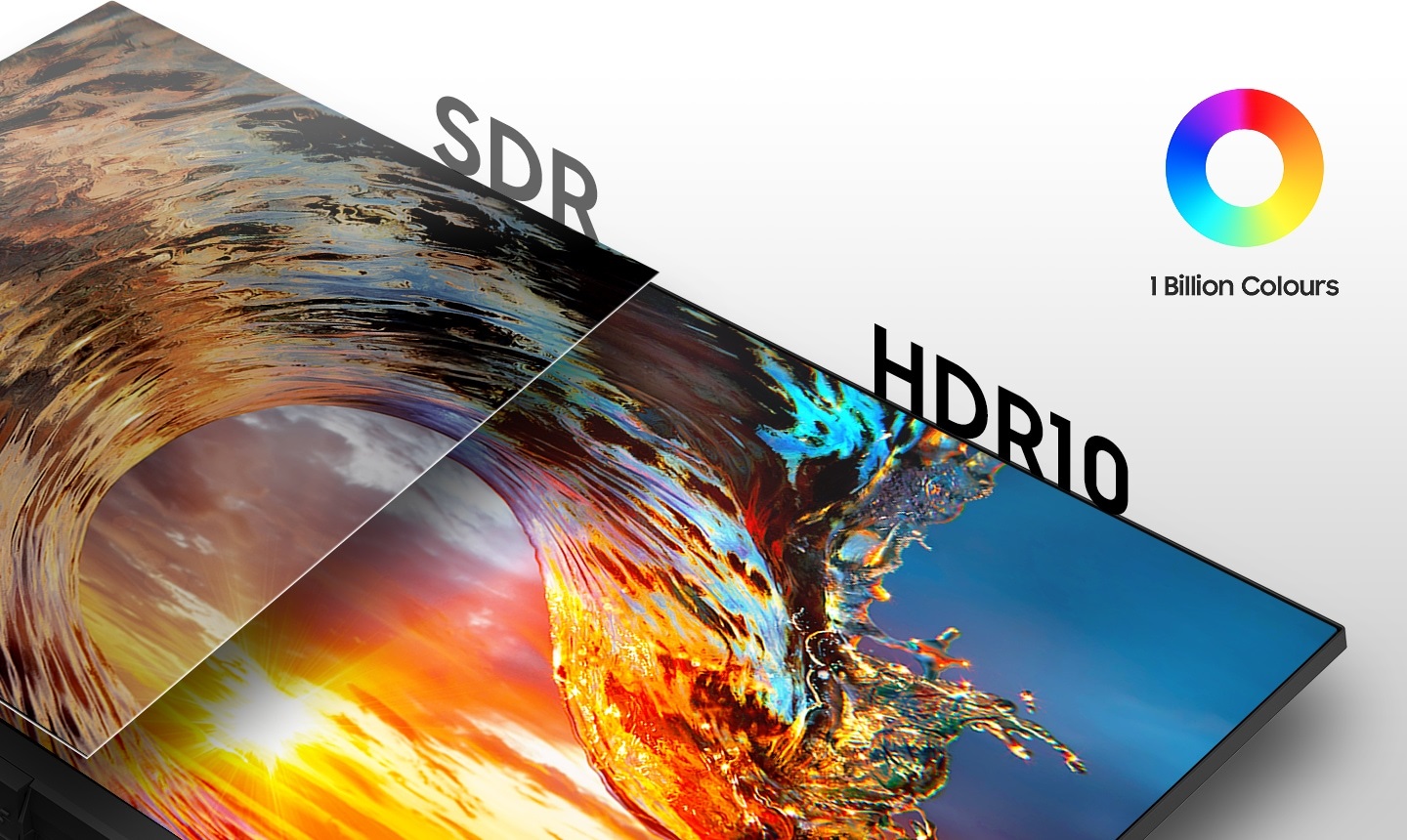
Every TV with HDR capability will back up HDR10, and the same is true of HDR content — to a degree. Content that uses another format, like Dolby Vision or HDR10+ besides have that basic HDR10 metadata, simply you won't necessarily go the full feel without a TV that supports those additional formats.
This standard is used by all major streaming services, including Netflix, Disney+ and Apple tree TV. If a streaming service has HDR content, it volition piece of work with any Television receiver that has HDR10.
HLG
The other broadly supported format is called Hybrid Log Gamma (HLG). Adult by a partnership of Japan'south NHK and the U.1000.'s BBC, the standard is made specifically for over-the-air broadcasts, and cable and satellite transmissions.
While y'all won't notice it on Blu-ray discs or offered by streaming services, HLG is an important format for calculation HDR to broadcast content, and is part of the ATSC 3.0 NextGenTV standard that broadcasters are rolling out across the country. And, like HDR10, information technology's a free standard that costs TV makers aught to add, then it'southward widely offered on pretty much every HDR Television receiver you can buy.
In practice, HLG doesn't create the same vividness and quality of HDR10 or Dolby Vision, but information technology'due south a stride up from SDR content, and will be a notable comeback when seen in live broadcasts.
The rivals: HDR10+ vs. Dolby Vision
Stepping up from the baseline standards, there are two prominent (and notably proprietary) HDR formats that offering better performance and a richer viewing experience. Championed past Samsung and Dolby, respectively, they are rarely found together. Some streaming services may offer both, and a handful of TVs may support the two standards, but the majority of HDR media will employ one or the other, and about TVs will back up one of these formats, but non both.
HDR10+
One of the two biggest proprietary HDR formats is HDR10+, developed by Samsung. Despite the obvious similarity in name to the free-to-utilize HDR10, Samsung'southward HDR10+ is a licensed format, and it differs slightly from that basic standard.
HDR10+ builds on top of HDR10, supporting higher brightness (upwards to iv,000 nits) and offering dynamic metadata that offers color and brightness adjustment information scene-past-scene or frame-by-frame.
With HDR10+ content supported on TVs from Samsung, Hisense, Vizio and Panasonic, it's easier than always to enjoy content that uses the proprietary standard. (Streaming devices from Roku and Google also support HDR10+ content.) Streaming services that offer HDR10+ include Amazon Prime number Video, Google Play Movies, Hulu, Paramount+, Rakuten. Information technology can also be plant on some 4K Blu-ray discs (view a total list at Blu-ray.com), but the format isn't consistently offered on all 4K discs.
HDR10+ Adaptive
An additional version of HDR10+ is available on select TVs, which adjusts the HDR effect to look better in different lighting conditions. For TVs that take an ambient light sensor, HDR10+ Adaptive will automatically optimize the brightness and contrast of HDR10+ to look good in whatever circumstances, whether it's a darkened home theater or a living room with sunlight streaming through the windows.
Dolby Vision
The 2d major proprietary format is Dolby Vision. Adult past the aforementioned company that brought you lot Dolby Surroundings Audio and Dolby Atmos, this technical standard has get the leading licensed HDR format. The biggest draw for Dolby Vision is that it offers an cease-to-finish solution for picture show product, letting directors and video editors set the HDR conditions that match their intent, instead of adding metadata on summit of existing material.
Different HDR10, Dolby Vision uses dynamic metadata, offering scene-past-scene and frame-past-frame adjustment to bring out the all-time visuals in every shot. Information technology also boasts the about expansive standards, allowing for higher resolutions, higher acme brightness, deeper blackness levels and color gamut with 12-bit color that exceeds the commonly used Rec. 2020 color infinite.

Dolby Vision IQ
Dolby Vision IQ is offered on some of the most premium TVs, and offers an updated version of Dolby Vision's HDR format. It offers automatic adjustment that tweaks the effulgence and dissimilarity of the Idiot box to all-time produce the same HDR issue in varied lighting conditions, whether it'southward a night room, or a brightly lit one. Withal, this adequacy is limited to TVs that have a built-in ambience light sensor, and so it's still unfamiliar to many Telly shoppers.
Other HDR formats
If you thought that those were the simply HDR formats bachelor, well, they're non. With the combined draw of licensing fees from TV makers and the opportunity to stamp their brand on a new standard for picture quality, other big names have tried to get in on the HDR boom. The two biggest are from Technicolor and IMAX.
Advanced HDR by Technicolor is actually a package of different formats, all tailored to different utilize cases, such as streaming, alive circulate and a dynamic metadata format similar to HDR10+ and Dolby Vision. Technicolor's HDR format saw brief support on LG TVs, merely information technology'southward not gone yet, and the broadcast aspects of Technicolor'south HDR are formidable. Information technology'southward included in the ATSC three.0 spec that broadcasters are starting to implement, and Technicolor is equally invested in their own HDR-enabled broadcast production process, which could meet large-scale adoption as these standards come into apply.
IMAX Enhanced is more than just a color and brightness standard like near HDR formats. Instead information technology also encompasses a larger fix of video and sound mastering standards, like a taller aspect ratio, and immersive DTS audio (like in some respects to Dolby Atmos). So far, this standard has only been adopted by Sony on its premium TVs, only Disney Plus has recently added IMAX Enhanced content for several of its Marvel films, so there'southward no reason to write off this format nonetheless.
What does this mean for TV shoppers?
With all of these different standards for HDR, which are the best to choose when shopping for a new set?
HDR10/HLG: These basic standards are a no-brainer. Every HDR-enabled Television receiver will support them, and so you'll have these standards covered with any TV sold in the last three years.
Dolby Vision or HDR10+? We generally prefer Dolby Vision over HDR10+, since the standard is more widely supported. But if yous're buying a Samsung TV (like the one that tops our best TVs folio right now), there'due south no Dolby Vision support available, and that's okay, besides. Either option will deliver a richer, more immersive motion-picture show watching experience. (And a few TVs fifty-fifty support both, similar the Vizio M-Series Breakthrough MQ6.)
Skip the extras: HDR10+ Adaptive and Dolby Vision IQ are keen additions to their respective formats, but adaptive brightness isn't a must-have. If the Idiot box you lot're interested in offers one or the other, great, but I don't think information technology's a characteristic worth paying extra for.
Don't forget the residue of your setup: If yous desire to bask Dolby Vision or HDR10+ on your Goggle box, you'll as well demand to find media (and, where necessary, a media player) that supports the same standard.
Regardless of which TV you want to buy, or which media source you lot turn to for movies and shows, there's a huge array of HDR content out there, and more than TVs than always earlier support some grade of these visual-boosting formats. Knowing what you lot want and what you have are the beginning footstep to getting a meliorate experience out of your TV.

Source: https://www.tomsguide.com/news/hdr-for-tvs-explained-hdr10-vs-hdr10-vs-dolby-vision
Posted by: strouponer1953.blogspot.com
0 Response to "Don't buy a TV until you read this guide to all those HDR standards"
Post a Comment